If you want to know how to save money on heating bills, starting in the middle of summer might seem a little unusual—but getting ahead before autumn arrives is one of the smartest moves you can make! But getting ahead of your energy costs before the autumn chill sets in is one of the smartest moves you can make for your household budget.
Everyone wants to cut down on their gas and electricity expenses alongside other household savings. While I’m not a certified energy expert, these are the simple, real-world habits my family and I use to keep our living space comfortable without overspending.
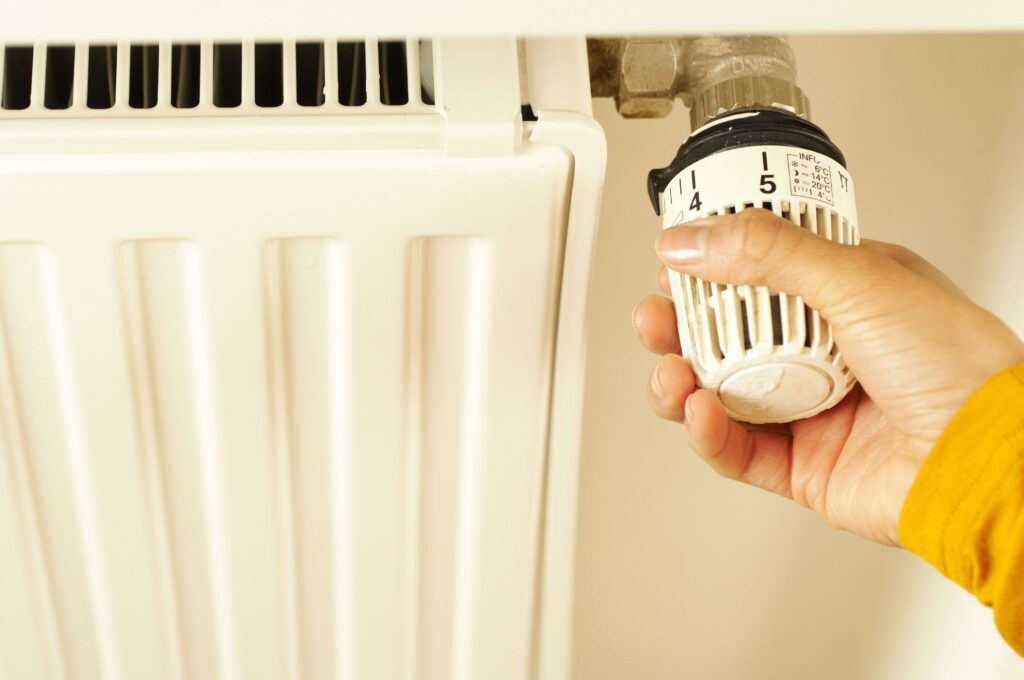
Table of Contents
1. How to Save Money on Heating Bills with Smart Timings
Instead of leaving the central heating running on an automated cycle all day, we are very specific about when it turns on. We set our thermostat to 20°C and only run the radiators for a couple of hours at a time—just enough to get the house up to a comfortable temperature.
Lowering your thermostat by even a single degree can make a noticeable difference to your annual bill, so find a balance that keeps your family warm without heating empty rooms.
2. Lock in the Warmth and Stop Draughts
When looking at how to save money on heating bills, there is no point paying to heat your home if that warm air is immediately escaping.
- Keep Doors Closed: Keep internal doors shut to retain heat in the specific rooms you are actively using.
- Tackle Draughts: Check for cold air coming through keyholes, letterboxes, window seals, or under doors. Fitting simple draught excluders or thermal curtains prevents leaks that force your system to work twice as hard.
3. Consider Zone Heating with Portable Electric Heaters
During winter evenings, our family spends most of our time gathered together in the main living room. Instead of firing up the entire central heating system for the whole house, we often use a low-wattage portable electric heater (around 500W) in that single room.
Heating just the room you are occupying is one of the easiest ways how to save money on heating bills without freezing the family.
4. Track Your Real-Time Usage with a Smart Meter
If you have a smart meter installed, make a habit of checking your in-home display. It provides immediate feedback on how changes in your daily routine—like turning the heating down by a degree or shortening radiator run times—impact your daily spend. Testing different habits allows you to find what works best for your home.
5. Check for Government Energy Grants and Free Insulation
Before winter arrives, investigate whether you qualify for official government insulation schemes or energy efficiency grants.
Programs like the Energy Company Obligation (ECO4) or the Great British Insulation Scheme offer free or heavily discounted cavity wall insulation, loft insulation, or heating upgrades for eligible households. Improving your home’s insulation shield permanently reduces heat loss for years to come.
Over to You!
What are your best practical tips for how to save money on heating bills? Share your thoughts in the comments below! Let me know in the comments below!
What is the most economical way to heat a home?
The most cost-effective approach is setting your central heating thermostat between 18°C and 20°C, using radiator thermostatic valves to turn off heating in unused rooms, and eliminating cold draughts throughout the house.
Is it cheaper to leave heating on low all day or turn it on when needed?
Energy efficiency experts generally agree that turning your heating on only when you need it is cheaper than leaving it running continuously on low, as heat continuously escapes through walls, windows, and doors.
Can I get free cavity wall insulation in the UK?
Yes, through government schemes like ECO4 or the Great British Insulation Scheme, homeowners and private tenants meeting specific eligibility criteria (such as living in a low EPC-rated home or receiving qualifying benefits) can receive free or subsidized wall and loft insulation.