If you have a child making the big leap to secondary school, you know exactly what I’m talking about. When my daughter recently started Year 7, the uniform price list arrived and my jaw completely dropped. Knowing how fast kids grow, my partner and I sat down to figure out how to save money on school uniform items without draining our bank account.
Back when I was at school in the early ’90s, things were simple. But looking at this list, everything had to be officially branded with the school logo: a branded blazer, branded jumper, branded PE kit, branded trousers, and even a branded school bag. To call the official supplier’s prices “inflated” and “extortionate” would be a massive understatement.
The full list from the official supplier would have cost us around £120. By shopping around and buying plain basics for everything that didn’t have to be branded, we got it down to around £60, half the price. My son’s uniform cost us even less: we were given his trousers, jumper and shirts for free.
If you’re facing the same sticker shock, here are the exact strategies we used to get high-quality school uniforms for a fraction of the retail price.
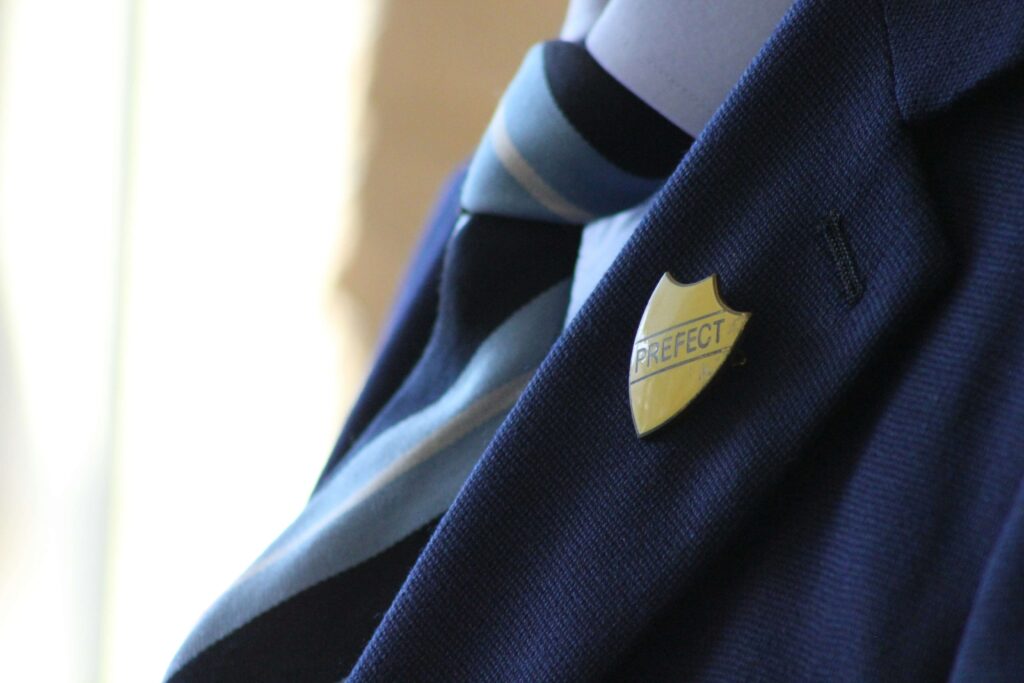
Table of Contents
1. Use Local Facebook Groups for Uniform Bundles
Before handing over your hard-earned cash to the school’s official supplier, head straight to social media.
I put a post out into our local neighbourhood Facebook groups explaining that my daughter was starting at the local secondary school. I asked if any parents of older kids had uniforms from the previous year that they no longer required or had grown out of. I offered to buy them cheaply or take them off their hands for free.
The response was incredible. A lot of local community members reached out, and we successfully scored several excellent items. Some were completely free, others were dirt cheap, and all of them were in fantastic condition. It saved us an absolute fortune.
Building a network with local parents is easily the most reliable way to find good second-hand uniform.
2. Don’t Sleep on the “Nextdoor” App
Another brilliant tool for hyper-local sourcing is the Nextdoor app. Because it connects you strictly with people living in your immediate neighbourhood, it is a goldmine for school gear.
Write a detailed post listing the specific school, the sizes you need, and the items you’re looking for. Parents are often desperate to clear out their wardrobes and are more than happy to pass things along to a neighbour.
Sourcing uniform locally is one of the quickest ways to cut the cost each September.
3. Check for School Uniform Banks & Internal Swap Sections
Don’t forget to look at the schools themselves:
- The School Website: Many secondary schools now have a dedicated section on their website or a portal where parents can list used uniform items for sale or swap.
- Primary School Uniform Banks: My son’s primary school does an amazing job with this. Every year, they run a uniform bank where parents donate outgrown clothes. At the end of the term, parents can go in and pick up any items they need completely free of charge. It has saved us a massive amount of money over the years.
Checking internal swap sections is a hidden gem for anyone wanting to figure out how to keep uniform costs down.
4. Buy Supermarket Basics for Everything Unbranded
For the items that don’t require a school logo—like plain white shirts, polo tops, or socks—completely bypass the official outfitters.
Supermarket own-brand clothing (like Asda, Sainsbury’s, or Tesco) is fantastic quality, highly durable, and cost-effective. And remember, if you want to stretch your pennies even further, you can often find bundles of these supermarket basics on Vinted or eBay for next to nothing.
For everything that doesn’t need a logo, supermarket ranges like Asda (George) and Sainsbury’s (Tu) are a great place to start, with multipacks of shirts and trousers that cost far less than the official supplier.
Finding the Best Budget School Uniform Deals
When you are actively trying to secure a budget school uniform without sacrificing quality, timing matters. Shopping during late summer supermarket promotional events or looking for online bundles can drastically cut costs, ensuring you stay well under your seasonal spending targets.
From September 2026, state schools in England can only require up to three branded items (four at secondary if one is a tie), and branded PE kit counts towards that. My daughter’s school list hasn’t changed yet, so if your child’s school still asks for more, it’s worth checking its uniform policy and asking the school about it.
📊 Grab Your Free Household Budget Tracker Sheet
Ready to take control of your monthly outgoings? Download our free, simple Google Sheet & Excel budget calculator to list your income, track your essentials, and spot hidden subscription bloat automatically.
Download the Free Budget Tracker →Over to You!
School uniform costs are getting out of hand, but by leaning on our local communities, we don’t have to pay full price. How do you save money on your kids’ school uniforms? Does your school run a uniform bank? Let me know in the comments below!
Can I get a government grant for school uniforms in the UK?
Yes, local authorities (LAs) in Scotland, Wales, and Northern Ireland offer non-repayable school clothing grants to eligible low-income families. In England, local councils have discretionary funding, so you should check your local council website or ask your child’s school about available support.
Are schools allowed to require all branded uniform items?
Not any more in England. From September 2026, state schools can require no more than three branded items, or four at secondary school if one of them is a tie. Branded PE kit counts towards the limit, so things like trousers, shirts and skirts should be available as plain items you can buy anywhere.
How much money can you save by buying supermarket school uniforms?
It depends on your school’s list, but it can be a lot. For my daughter, the official uniform would have cost around £120, but buying supermarket basics for the unbranded items and shopping around brought it down to around £60.
