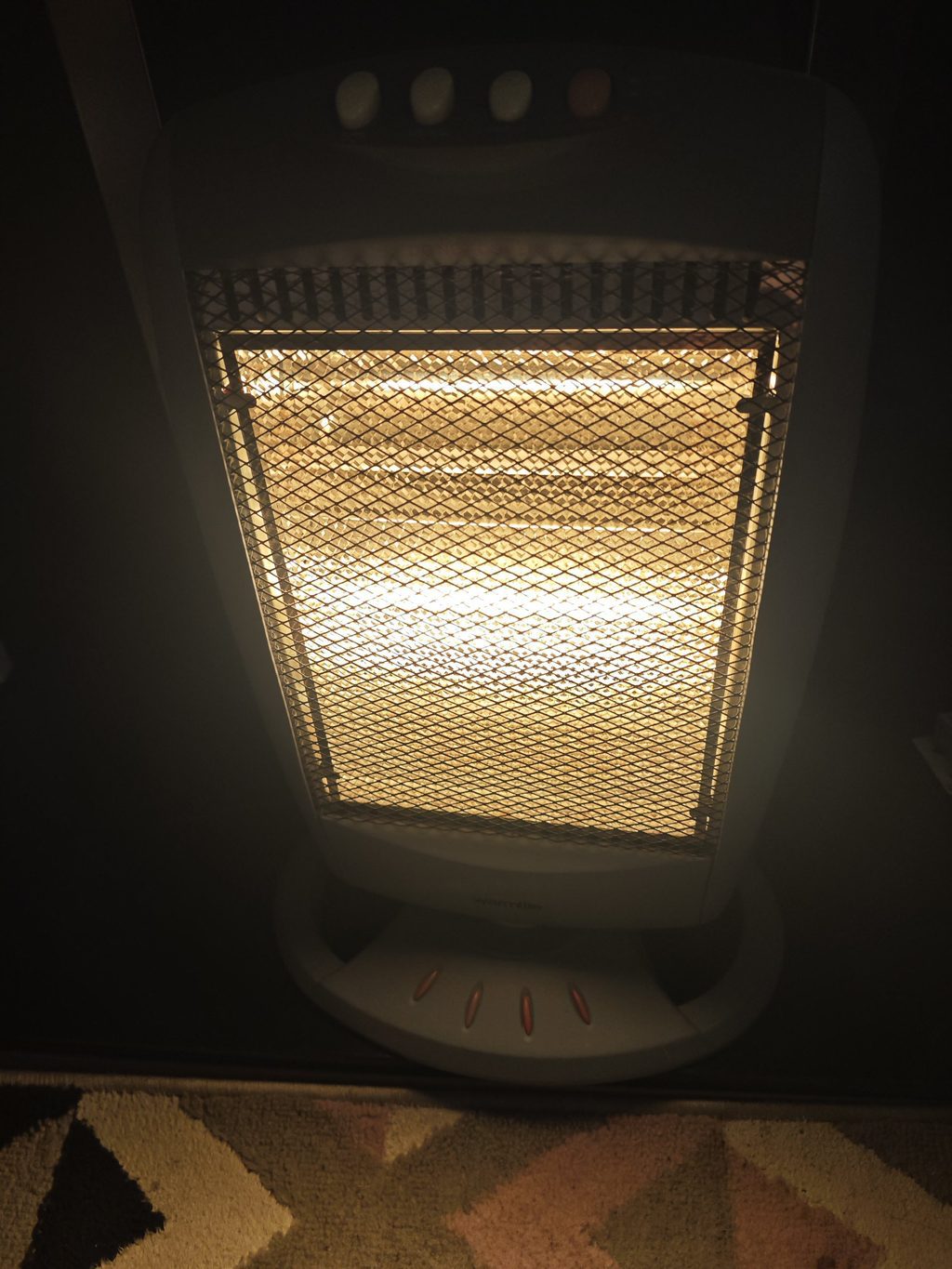
As soon as the evenings get colder, the same question comes up in our house: do we put the central heating on, or just switch on the little heater in the living room? And which is actually the cheapest electric heater to run?
We’ve got into a routine that works for us. The radiators go on from around 7pm until 9pm, and outside of that we use a small electric heater in the living room with the door kept closed. There are extra blankets on the kids’ beds, and I’ve draught-proofed our windows and doors so the heat we pay for actually stays in.
But it made me wonder: which electric heater is actually the cheapest to run? And is an electric heater really cheaper than the central heating? So I worked out the real cost per hour of every common type of heater, using the latest energy price cap.
Table of Contents
How Much Does an Electric Heater Cost to Run?
Working out the cost is easier than it sounds. You just need two numbers:
- The heater’s wattage. You’ll find it on the label, usually on the back or underneath. 1,000 watts is 1 kilowatt (kW).
- Your electricity unit rate. Under the Ofgem price cap from 1 October to 31 December 2026, the average rate for Direct Debit customers is 26.32p per kWh.
Then: cost per hour = kW × unit rate. So a 2kW heater running flat out costs 2 × 26.32p = about 53p an hour.
Your own unit rate may be slightly different depending on where you live and your tariff, so check your latest bill and swap your number in.
Electric Heater Running Costs Per Hour (Winter 2026)
These costs are for each heater running at full power, at 26.32p per kWh:
| Type of heater | Typical wattage | Cost per hour | Cost for 3 hours a night, 30 nights |
|---|---|---|---|
| Electric blanket | 60W | 1.6p | £1.42 |
| Heated throw | 100W | 2.6p | £2.37 |
| Small infrared panel | 350W | 9.2p | £8.29 |
| Halogen heater (low setting) | 400W | 10.5p | £9.48 |
| Oil-filled radiator (small) | 800W | 21.1p | £18.95 |
| Halogen heater (high setting) | 1,200W | 31.6p | £28.43 |
| Oil-filled radiator (standard) | 1,500W | 39.5p | £35.53 |
| Fan or convector heater | 2,000W | 52.6p | £47.38 |
One important thing: most heaters don’t run at full power all the time. Oil-filled radiators and heaters with a thermostat switch themselves on and off to hold the temperature, so once the room is warm they often use a lot less than the figure above.
So What’s the Cheapest Electric Heater to Run?
Cheapest overall: heated throws and electric blankets. At a few pence an hour, nothing else comes close. They don’t heat the room; they heat you. If you’re sitting on the sofa or working at a desk, that’s often all you need.
Cheapest for heating a room: a small oil-filled radiator or infrared panel. An oil-filled radiator takes a while to warm up, but it holds its heat and the thermostat keeps the cost down. Infrared panels heat people and objects directly rather than the air, so they work well in a room you’re sitting still in.
Most expensive: fan and convector heaters. They’re cheap to buy and heat a room fast, but at over 50p an hour on full power they’re the ones to be careful with. They’re best used for a quick blast to take the chill off, not left on all evening.
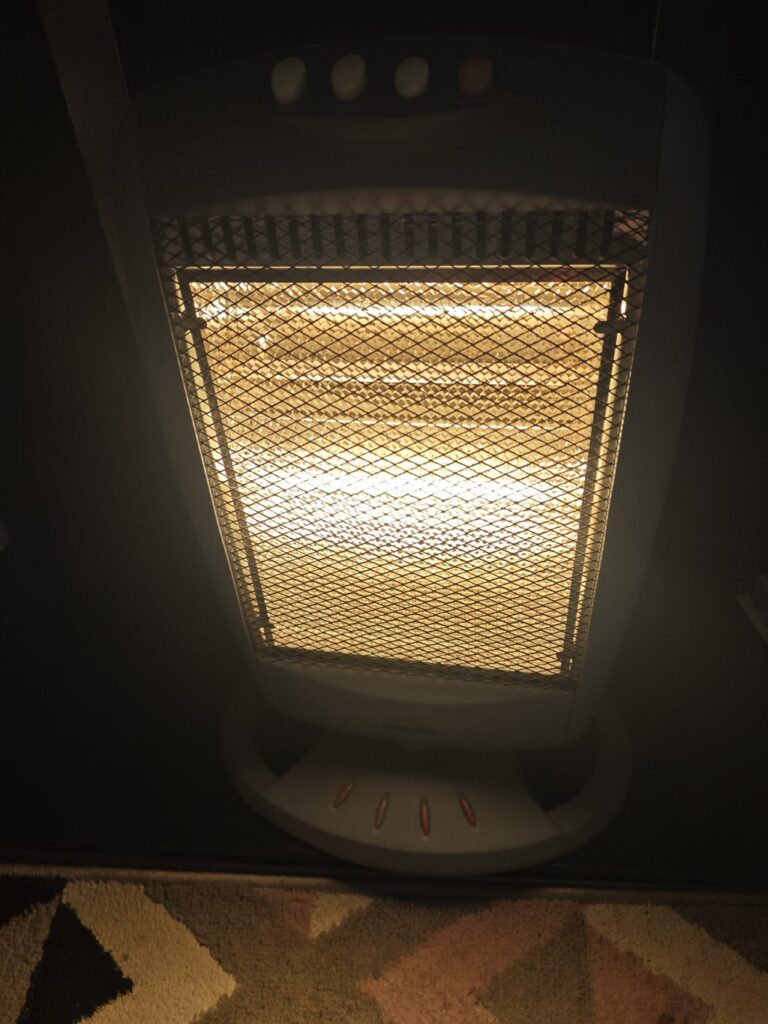
The heater we use in our living room is a Warmlite 3-bar halogen heater. It’s rated at 1,200W, with each bar using around 400W, so the cost depends on how many bars you switch on:
- 1 bar (400W): about 10.5p an hour
- 2 bars (800W): about 21p an hour
- All 3 bars (1,200W): about 32p an hour
In practice, we put all three bars on for a few minutes to take the chill off, then drop it down to one bar. The great thing about halogen heaters is that you feel the warmth almost instantly, because they heat you rather than the air. The downside is that the room cools down quickly once you switch it off, so they’re best for sitting close by, not for heating a big space.
Is an Electric Heater Cheaper Than Central Heating?
This is where it gets interesting, and it’s the question I really wanted answered.
Per unit of energy, gas is much cheaper than electricity. Under the October 2026 cap, gas costs 7.97p per kWh compared with 26.32p for electricity, so gas is roughly three times cheaper. Even allowing for a boiler not being 100% efficient, heating with gas costs a lot less per unit of heat.
So why do we still use an electric heater? Because central heating warms the whole house, while a small heater only warms the room you’re actually in. If it’s just one or two of you in the living room for an hour or two, heating that one room with electricity can cost less than heating every room with gas. But if the whole family is spread around the house for the whole evening, the central heating on a timer usually works out cheaper.
That’s why we do both. Short bursts of the small heater when we only need one room warm, and the radiators on a timer for a couple of hours in the evening when everyone’s home.
My Tips to Keep Heating Costs Down
- Heat the room, not the house. Keep doors closed so the heat stays where you are. It makes a real difference.
- Stop the draughts first. There’s no point paying to heat a room if the warm air is leaking out through gaps around windows and doors. Draught-proofing was one of the cheapest jobs I’ve done, and one of the most effective.
- Put the heating on a timer. Our radiators go on from 7pm to 9pm, rather than all evening.
- Warm the person, not the room. Blankets on the beds and a throw on the sofa cost next to nothing.
- Use the thermostat on your heater. Set it to a comfortable temperature rather than full blast, and let it switch itself off.
- Never leave a heater on unattended or overnight, and keep it clear of curtains, clothes and furniture. Safety first, always.
- Bleed your radiators before winter. Trapped air stops them heating properly, and you don’t even need a key: here’s how to bleed a radiator without a key using a flat-head screwdriver.
For more ways to cut your heating bill this winter, see my guide to saving money on heating bills and my tips to cut your household energy bills.
Over to You!
Do you use an electric heater, a heated throw or just extra jumpers to get through winter? Let me know what works in your house in the comments below!
Costs based on the Ofgem energy price cap average for Direct Debit customers, 1 October to 31 December 2026: electricity 26.32p per kWh, gas 7.97p per kWh. Your own rate may differ.
What is the cheapest electric heater to run in the UK?
Heated throws and electric blankets are the cheapest, at around 2p to 3p an hour. For heating a whole room, a small oil-filled radiator or infrared panel is usually cheapest, especially one with a thermostat. Fan and convector heaters cost the most, at over 50p an hour on full power.
How much does a 2kW heater cost per hour?
At the October to December 2026 price cap rate of 26.32p per kWh, a 2kW heater costs about 53p an hour when it’s running at full power.
Is it cheaper to use an electric heater or central heating?
Gas is roughly three times cheaper per unit than electricity, so central heating is usually cheaper for heating a whole house. A small electric heater can work out cheaper if you only need to heat one room for a short time.
Are oil-filled radiators cheap to run?
They’re one of the cheaper options for heating a room. A 1,500W oil-filled radiator costs about 40p an hour at full power, but because they hold heat and use a thermostat, they often run below full power once the room is warm.
